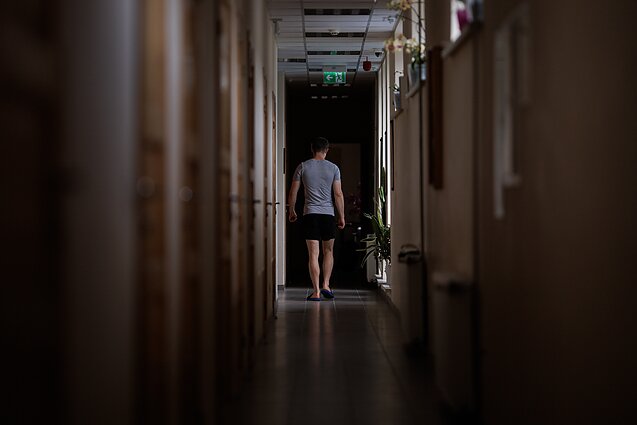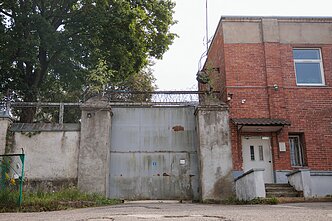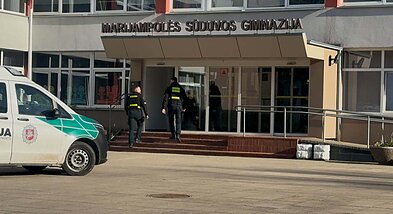
















Hardly any of his fellow coursemates are aware that Lukas (name changed) heads back to prison after attending lectures at a university in Vilnius. There are nine other students like him across the country.
Lukas was sentenced to 10 years in prison after being caught with a large haul of narcotics. Determined to do everything he could to shorten his sentence, he started studying computer science at university.
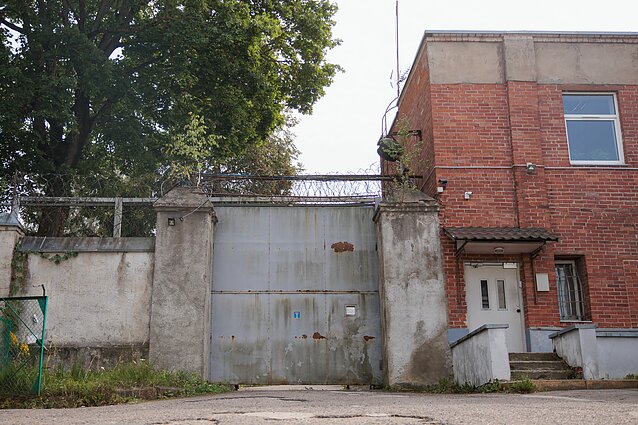
We talk in the so-called halfway home of Vilnius Prison, which is almost empty during the day – all the inmates are at work. Lukas is the only university student among them.
How did you start dealing drugs?
It was an opportunity to get easy money. When you start dealing, you realise that there are almost no saints in Vilnius. You see that almost half of the young people in Vilnius use drugs. There are some older people, but it’s rare. There are villages in Lithuania where people drink, and there are places where people like to use drugs.
When I got involved in this, drugs became a problem for me too, as I started to use them.
Did your family lack money?
No, we were never short, I was just ashamed to ask my parents. They would have helped without saying anything. A lot of young people would agree with me that when you’re 18 years old you want to go out into the world on your own. Only I went to the extreme, to drugs.
You were caught with a large quantity, so you had already moved up on the ladder, so to speak?
I was caught with 5 kilos of drugs. There was a little bit of everything: ecstasy, cocaine, crystals. Anyone can deal, you just have to lose your sense of fear, and not think about yourself or your loved ones.
How did your family react?
I can only say my family is Christian. My father is a saint, a very good man. Many people [in prison] have grown up without parents or with parents who drink, while they had the ideal conditions to raise a decent person.
My father still blames himself. My mother is a bit more stable, but my father’s hair has even turned grey in those 3.5 years that I’ve been in prison. But now the relationship is improving.
When I went to university, my parents no longer had to lie that their son was away, they could say that their son was studying. Everything has changed and my parents are smiling again.
How common is it for young people to get involved in drug dealing?
That’s the new culture. Before, young people used to speak Russian, now they speak English. Before they were looking toward Russia – using alcohol, doing sports, and being anti-drugs. And now they are for tolerance, for smoking cannabis, for being open-minded, for trying all kinds of things. Among the older generation, the word “drugs” is taboo, and unjustifiable, but among the youth, it is a normal topic. It does not mean that they use drugs, but it can be spoken about as a normal thing, a choice.
And what was the reaction when the officers appeared outside the door?
I thought that’s it, now I’m done. There were two times before that when they had almost caught me. [...] Of course, I was sad, but I knew it was my fault.
I had watched films, and the sentences there were 20 years. I had accepted that my life had to be replanned, but then I met a lawyer. He said: no, we are in Europe, there is still hope. The first time they locked me up, they said, maybe you’ll do a bit of time, you’ll come to your senses, you’ll get 10 years, and you can go to the open prison after a third [of your sentence]. It can be worse – in Thailand or the United States, drug sentences are life without parole. Your life is written off.
As soon as I was sentenced, I made a plan: it is what it is, now I have to get [focused]. My mother brought me a computer and I started learning programming. And now at the university, it’s not difficult for me. Considering how bad it could have been, everything turned out perfectly. I could have been in prison for 10 or 15 years, and now I’m studying a good profession, there’s nothing to be sad about.
What was your first impression when you went to prison?
It was a shock at first. But it’s full of people like me, who have just overdone it a bit in life [...]. There’s nothing special there, you shouldn’t believe the articles about the horrors of prison. We see them and laugh. You just live your life, you’re a normal person, you made a mistake in life. It’s like a village: imagine a small community, a small village, where when something happens, everybody hears about it.
Was it difficult to tell your friends and family?
Everybody found out. I can freely tell my friends that I got sentenced because they know me, they know what kind of person I am, and the fact that I am in prison won’t change anything. I didn’t kill anybody, and drugs are, of course, bad, but considering how young people look at drugs nowadays, in the eyes of some people, I didn’t do anything wrong.
But for those who don’t know me, to say that I’ve been sentenced to 10 years [is difficult]. You can see immediately how the look changes, and how the person gets disturbed. The 10-year sentence scares people.
How did you come up with the idea that you wanted to study? Was it a plan to shorten your sentence?
It just suddenly dawned on me that while I was in prison, I could learn programming. The law changed, and they started putting prisoners on parole and releasing those who were eligible into the so-called open jails. I started thinking about freedom, and what I would do, I realised that I might be able to go to university.
My mother filled in the application form, and I kept my fingers crossed to get into the open prison in time for the academic year. And I was lucky, I got [into the open jail] and got into university.
I didn’t go to university to make myself look better. I needed to do something with my life. Am I going to sit around and do nothing good? I did 3.5 years in prison already, I wasted a lot of time.
What is your student life like, do you miss out on important things?
I was invited to freshers’ parties or other nonsense. I always say that I’m too old for such things: you’re 18 or 19, have fun, and I’m 25. And I’m not attracted to those kinds of things now.
And you have to go back to the open prison to check in?
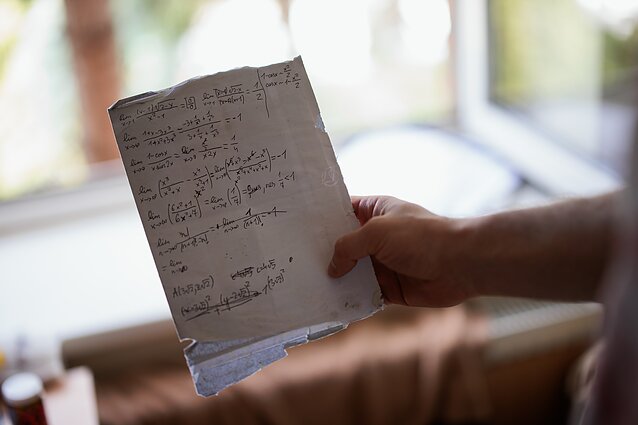
First, I was only allowed to go to lectures and back. But now, they let me stay longer because it’s easier to study at university. When I first came to the open prison, I used to sit curled up on the bed and write in my notebook. It’s uncomfortable. But at university, you can sit at a desk, bring your computer, and connect a second monitor.
The officers are kind, they really try to help. [...] Some people get angry and argue, but I’m fine. In the evening, I go to Muay Thai training, and I don’t come back until 21:00.

And social life? Do you have time to meet friends?
We have a two-night outing on weekends. Friday night I go out, Sunday night I come back. Nobody at the university knows I’m in prison, but my friends are not from the university.
What are your plans after graduation?
I want a good salary (laughs). I won’t be in prison for long: a couple of years, then parole, and by then I will have finished my bachelor’s degree. Anything is possible.
Is it likely that you will leave on parole before you graduate?
Yes, I hope that the fact that I am studying will help, and I will still try to get good grades. If they don’t let me out, the important thing is that I have the conditions to study. Now I am living in peace because I know that I’m not wasting my life. My heart is calm.
[...] It was scary to me at first, because when you are aged 20 to 30, you have the most drive and ambition, the most enthusiasm. Instead, you are spending your time locked up.
How do the other inmates perceive you?
They say I’m doing well. They used to say: I’m too stupid to understand, don’t even tell me what you’re doing, while others say this kid will make it. I have never once heard anyone say anything bad.
How do you think leaving jail will feel like?
Nothing will change. It’s just harder to have a girlfriend. I had found one once [but when] I told her that I was in prison, she wrote a long message and blocked me. Then I decided that I would lie. What can I do? I decided that I needed to avoid telling this fact about myself as long as possible. By the time I break the news, they will be in love and it will be too late.
She blamed me for not telling her right away. But look at it from my side – if I tell her immediately, she won’t even talk to me. But if I tell her later on, she will already know me as a person [and not as an inmate].

Newsletter
Every Friday morning.